Space Force rejects SpaceX for three military missions; PLD Space finalizes Miura 5 rocket
The US military passed over SpaceX for three upcoming launches, while the Spanish firm PLD Space confirmed its Miura 5 vehicle is nearing its final pre-flight integration.
By Kateryna Melnyk ·
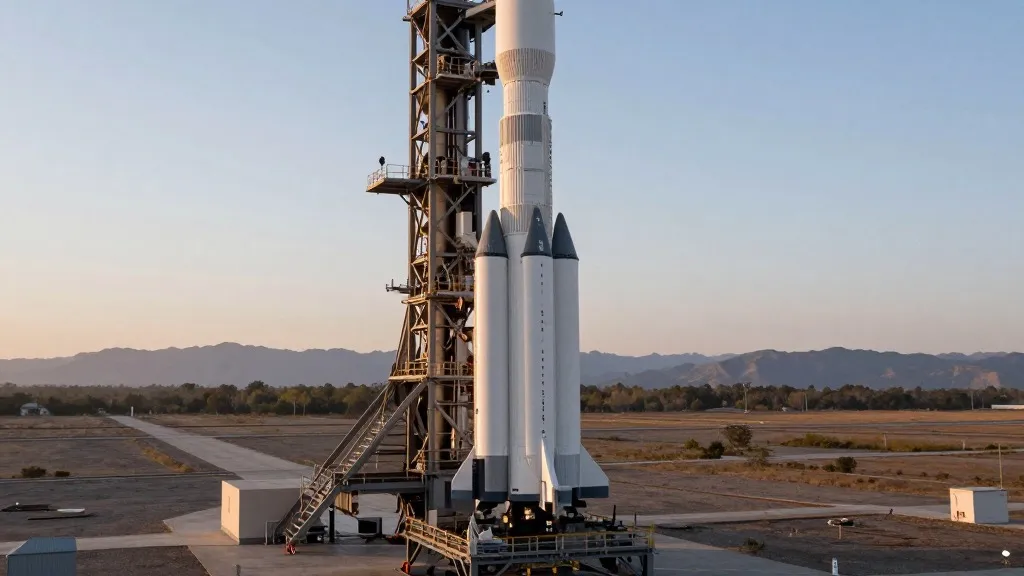
The United States Space Force has decided against awarding three military launch contracts to SpaceX, a decision that signals a shift in the commercial launch landscape for defense missions. This move, announced on Thursday, indicates that the military is diversifying its provider base rather than relying solely on the dominant private sector player. The rejection of these specific contracts adds to a growing list of opportunities that SpaceX has declined or not been selected for, highlighting a competitive tension within the US launch market.
In parallel developments on the commercial side, a NASA safety panel has outlined the technical requirements for SpaceX’s Starship vehicle in relation to lunar missions. The panel indicated that up to 22 in-orbit refueling operations may be necessary to support a crewed landing on the Moon. This figure represents a significant logistical challenge, as it requires precise coordination of multiple tanker flights and complex rendezvous maneuvers. The emphasis on refueling volume underscores the immense energy requirements for deep space travel.
On the international front, Spain’s PLD Space has reported that its Miura 5 rocket is approaching the final stages of integration. The company, which is based in Teruel, has manufactured three units of the small-lift vehicle. According to CEO Raúl Torres, the other two units were used to qualify key system elements, allowing the team to apply lessons learned directly to the flight-ready version. PLD Space now targets a first flight for this vehicle before mid-2027, marking a significant milestone for European small-lift capabilities.
Torres noted that the production of these three vehicles allowed the engineering teams to work continuously across different stages of production. "Manufacturing these three vehicles has allowed our teams to work continuously across different stages of production and integration, applying the lessons learned from each qualification campaign directly to the launch vehicle," Torres said during an October 19 program update. This iterative process is designed to ensure that the operational vehicle benefits from the data gathered during the qualification campaigns of its predecessors.
Currently, one Miura 5 second stage is fully integrated and has begun system-level testing under representative operating conditions. This stage is located at PLD’s test facility in Teruel, where it is undergoing a rigorous qualification campaign. The testing protocol includes a wet dress rehearsal and a static hot-fire test, which are critical steps to validate the structural and propulsion systems before the vehicle is cleared for flight. These tests simulate the stresses of launch to identify any potential failure points.
Meanwhile, in Canada, Reaction Dynamics is seeking to raise $350 million to expand its operations significantly. The company aims to grow its staff from 68 employees to more than 350 as it accelerates development of its Aurora small-lift rocket. Reaction Dynamics hopes to have the Aurora vehicle reach orbit by 2028. The fundraising effort is part of a broader strategy to establish a robust launch capability in North America, competing with other prominent Canadian startups in the sector.
In addition to the Aurora, Reaction Dynamics has announced plans to develop a medium-lift rocket named Borealis. The company targets a debut for this larger vehicle by 2031. This dual-track approach allows Reaction Dynamics to address immediate small-lift needs while building toward heavier payload capacities. The expansion of staff and the introduction of a second rocket type indicate a long-term commitment to becoming a major player in the global launch market.
The convergence of these events—SpaceX’s selective approach to military contracts, the technical hurdles facing Starship, and the progress of international competitors—illustrates a maturing space industry. As nations and private entities seek reliable access to orbit, the focus is shifting toward diversifying providers and refining the complex logistics of deep space travel. The coming months will likely bring further clarifications on how these developments impact the broader launch schedule and commercial partnerships.
For readers in the Southwest and beyond, these shifts in the launch market may influence local economic activity and technological infrastructure. The success of vehicles like the Miura 5 and Aurora could lead to new launch sites and associated industries in various regions. As the industry moves from development to operational phases, the stakes for reliability and cost-efficiency continue to rise, driving innovation across the board.
Source: Ars Technica